

Before hiring for sliding glass door repair, ask what is causing the problem, what work the quote includes, and how the contractor will test the finished repair. Clear answers help you distinguish a worn roller or damaged frame from a handle that simply feels uncomfortable.
A door that grinds, sticks, or will not latch needs a different fix from a door that slides smoothly but has a poor grip. Start by describing what you notice, then ask the contractor to explain the diagnosis and proposed work in plain language.
Ask about the symptoms before scheduling
Describe what happens when you open, close, or lock the door. Mention whether it scrapes, jumps, leans, needs lifting, or stops short of the latch. Also say whether the trouble began suddenly or has worsened over time. These details can help a contractor prepare for the right inspection.
Ask, "What do these symptoms usually point to, and what will you inspect first?" A sliding panel can become difficult to move when its rollers, track, or adjustment no longer work together. A door that grinds or catches hard shouldn't be forced, especially if the panel leans. For more on common causes, see troubleshooting a sliding door that scrapes or sticks.
If the door moves normally but the lock will not engage, describe that separately from any movement problem. A latch issue, a roller adjustment, and a damaged track call for different work. Be specific about what you've observed, without trying to diagnose the cause yourself.
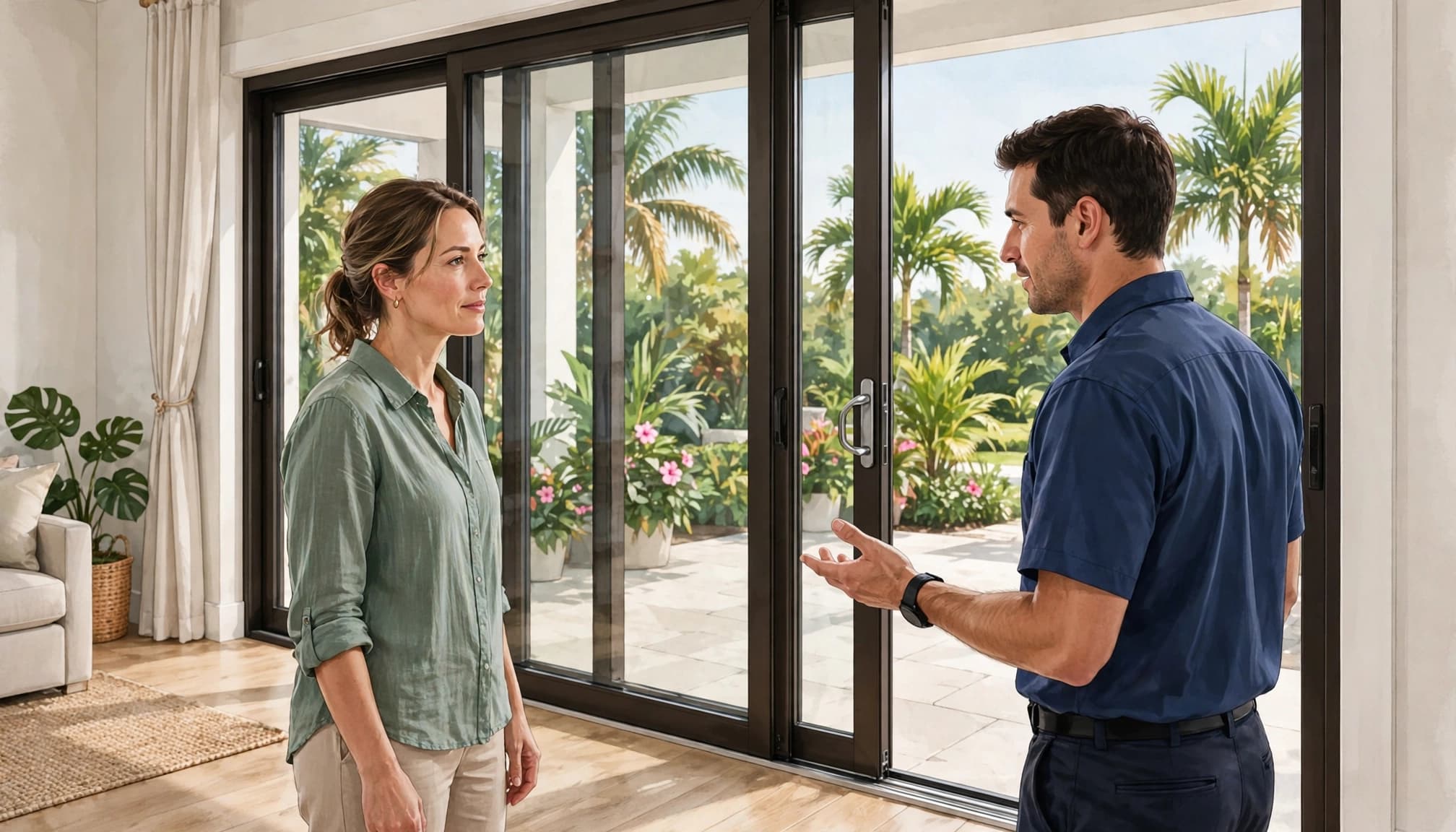
Questions about sliding glass door repair diagnosis
A useful estimate begins with a clear diagnosis. Ask the contractor to identify the part that has failed and explain what evidence supports that conclusion. If the proposed fix involves the rollers, ask whether the track is also worn or damaged. If the frame is involved, ask what has shifted, separated, or deteriorated.
Ask what the inspection will cover
A contractor may need to check the rollers, track, latch, handle, sill, and frame to understand why the door is failing. Ask which of those components they inspected and what they found. If water is entering near the base, include the threshold in the discussion. The guide to inspecting a sliding door threshold can help you identify the area you're describing.
Ask what could be causing the same symptom
A door that doesn't close can have a movement problem, a latch problem, or both. Ask how the contractor will distinguish among them. A good explanation should connect the observed symptom to the recommended work, rather than jump straight from "sticking" to replacing the whole door.
If the diagnosis remains unclear, ask what additional inspection is needed before work begins. That gives you a chance to understand the scope before agreeing to repairs.
Get a written scope before approving work
The written estimate should describe the problem and the repair in enough detail that you can tell what the contractor plans to do. A total price by itself doesn't explain which parts are included or what happens if the initial diagnosis changes.
Ask what the price includes
Ask whether the quote covers parts, labor, removal of damaged components, and cleanup. If the contractor recommends frame work, ask what has separated and how they confirmed it. Also ask whether associated damage is included, or whether it would require a separate estimate. For more detail on questions to raise, see what to ask about a patio door frame repair quote.
Agree on how extra work will be handled
Hidden damage can change a repair once work is underway. Ask how the contractor will explain unexpected findings and whether they'll pause for your approval before adding charges. Get that process in writing. This keeps a small repair from expanding without a clear discussion of the added work and cost.
Compare proposals by scope, not just by their totals. One estimate may cover a complete repair and testing, while another may list only a limited adjustment. If the descriptions differ, ask what each one leaves out.
Compare estimates and warranty terms
When you request more than one estimate, give each contractor the same description of the problem. Then compare the proposed repair, parts, labor, and any exclusions. A lower price may reflect a narrower scope, so make sure you're comparing similar work.
Ask whether parts and labor have separate warranty terms, how long each is covered, and what the warranty excludes. Also ask what to do if the same symptom returns. A written answer is more useful than a broad promise because it tells you what the contractor will address after the job.
You can also ask who will perform the work and whether the contractor carries the relevant licensing and insurance for your area. Requirements vary by location and job type, so focus on the credentials and coverage that apply to your project. Ask for the details in writing if they affect your decision.
Finally, ask whether the quote is valid for a set period. That makes it easier to compare bids without assuming that parts or labor prices will stay the same indefinitely.
Ask how the contractor will test the repair
A repair isn't complete just because the panel moves once. Ask what the contractor will test before calling the job finished. The door should travel smoothly, close without being forced, and latch as intended.
Ask for a movement and lock check
Ask the contractor to open and close the door several times, then test the lock and latch. If the door needed lifting or slamming before the repair, check whether that problem has stopped. A latch that still misses the keeper may point to an alignment issue or another fault. The sliding patio door track, roller, and handle fixes cover several problems that can affect closing.
Ask what to watch for afterward
Have the contractor explain which sounds or changes mean the repair needs attention. Grinding, scraping, or a panel that starts to lean again may indicate that the original problem has returned or that another component needs work. Ask whether any maintenance is appropriate for the specific repair, and follow the instructions for the parts installed.
Discuss repair versus replacement
Ask why the contractor recommends repairing the door instead of replacing it, or the other way around. The answer should relate to the actual condition of the glass, frame, rollers, and hardware. A worn component may be repairable, while extensive damage can make a larger replacement more sensible.
Ask what replacement would solve
If you're offered a full replacement, ask which existing problems it will address and whether the frame or rough opening needs work too. Replacement may be appropriate when there's extensive rot, failed insulated glass, or repair costs approaching the price of a new unit. For more context, read whether to repair or replace a patio door.
Ask how a large glass panel will be handled
Sliding glass panels are heavy. If the job requires removing one, ask who will handle that work and how the contractor will protect the opening and surrounding area. Don't try to remove a large panel yourself. A qualified repair professional can manage removal and inspect the opening as part of the job. If the frame appears warped, review when to replace a warped sliding door frame.
Separate a handle problem from a door repair
A hard-to-grip handle doesn't always mean the door needs mechanical repair. If the panel moves, closes, and locks properly, the issue may be comfort or grip. However, a handle retrofit won't repair a failing roller, damaged track, or broken lock assembly.
A Sliding Glass Door Replacement Handle can be a practical option when the existing handle feels too small, loose, or awkward, but the underlying hardware still works. Luuv Handle's retrofit is made in the USA, is patented through 2037, and requires no alteration to the door and no drilling. It fits over compatible existing hardware, leaving the original lock and latch in place.
The retrofit is designed for a door plate measuring 7.25 by 1 inch, so measure the plate and check clearance near the screen door before choosing a handle. Luuv Handle offers white and bronze exterior handles for $30, interior handles for $22, and inside-and-outside bundles for $50. The handles use steel and water-resistant oak.
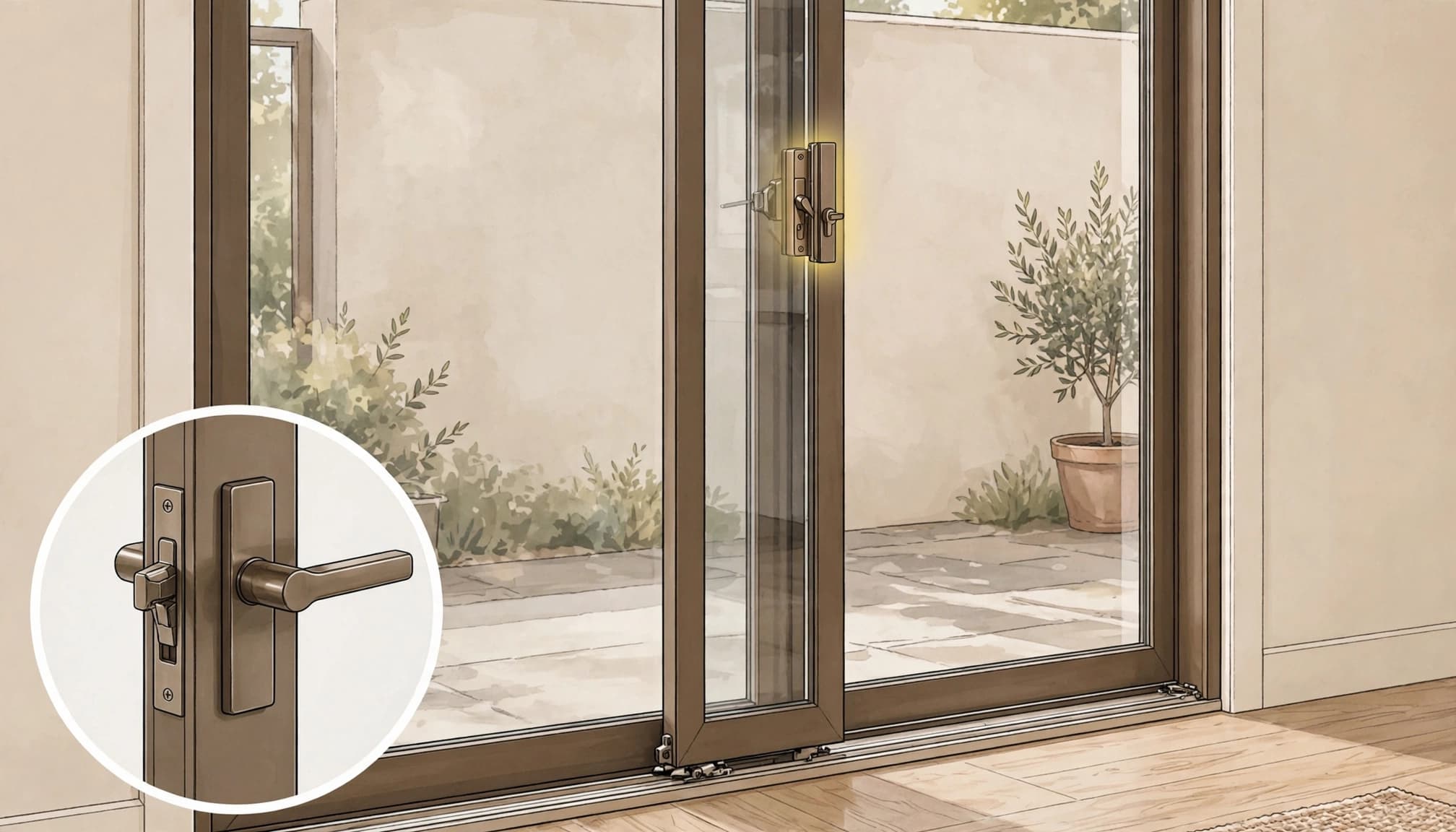
Ask a contractor to separate grip comfort from mechanical problems in the estimate. A comfortable retrofit handle won't correct a dragging door, and a roller repair won't make a shallow pull easier to hold.
Key Takeaways
- Describe the symptoms and ask what inspection supports the diagnosis.
- Get a written scope that names the work, included costs, warranty terms, and process for added charges.
- Ask the contractor to test door movement, closing, and locking before finishing.
- Treat a handle upgrade as a separate fix from roller, track, frame, or lock repairs.
Frequently Asked Questions
Should I replace the whole door if it sticks?
Not necessarily. Sticking can come from rollers, a dirty or damaged track, or alignment. Ask for a diagnosis before deciding. Extensive rot, failed insulated glass, or repair costs close to replacement may support replacing the door.
Can a replacement handle fix a door that won't roll?
No. A retrofit handle improves the grip, but it doesn't repair rollers, track damage, or alignment. Have the movement problem assessed first.
What should a repair estimate include?
It should identify the diagnosed problem, describe the work and parts, state what the price includes, and explain warranty coverage. Ask how unexpected damage and additional charges will be handled.
Does a retrofit handle require drilling?
Luuv Handle's compatible retrofit handle installs over existing hardware with no drilling or alteration to the door. The existing plate must match the product's fit requirements.
Choose the Repair That Matches the Problem
A reliable hiring decision starts with a specific diagnosis and a written plan. Ask how the contractor identified the fault, what the quote covers, and how they'll test the result. When the door works but the grip doesn't, a compatible retrofit handle can address that separate concern without changing the door.